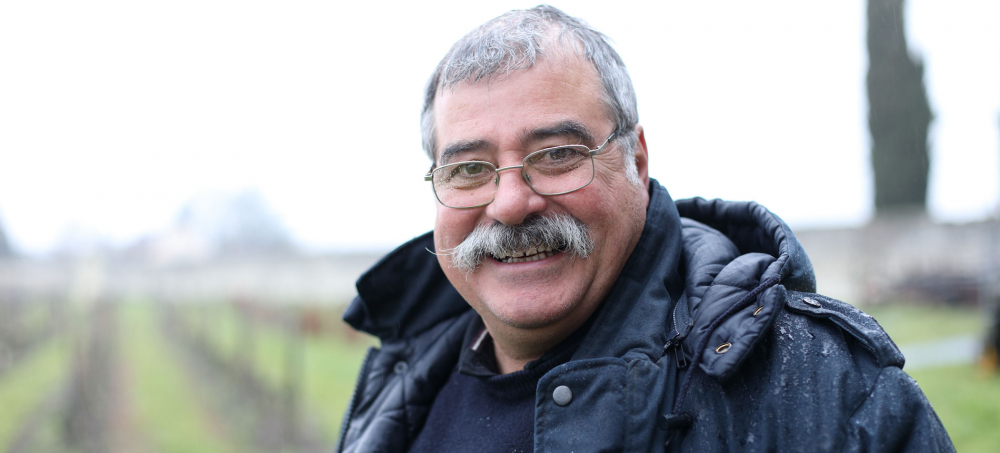
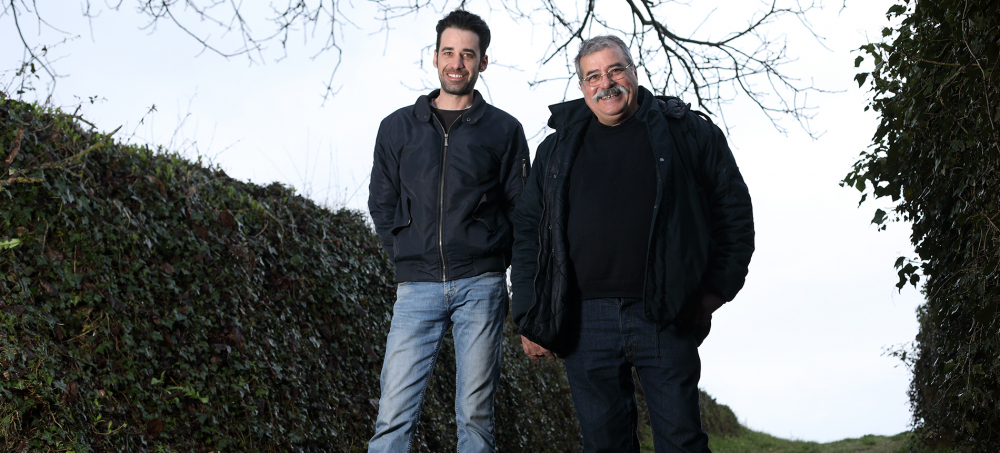
Each year on our trip to the Loire, we have the pleasure of dining with vignerons in their homes and favorite restaurants in the area. Other than perhaps the famed Clos Rougeard, there is no other domaine whose wines we see more frequently on restaurant lists and in other vigneron's personal cellars than Pierre and Rodolphe Gauthier's Domaine du Bel Air. We were introduced to Pierre Gauthier by our friend and colleague Michael Sullivan, owner of California importer Beaune Imports. Michael discovered the Gauthier wines through the late Didier Dagueneau, who asked Michael if he was interested in meeting "at true vigneron" and sent him to Bourgeuil to meet Pierre and witness his remarkable stewardship of the family's 18 hectares in the village of Benais.
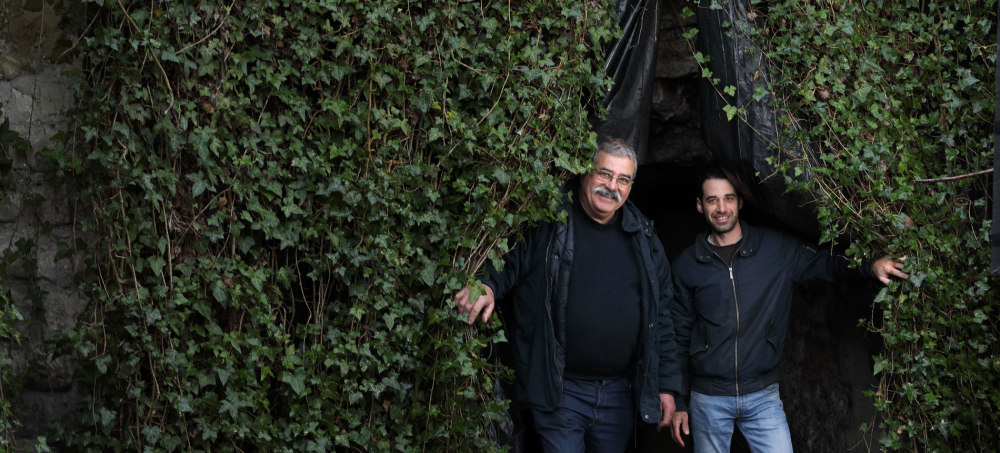
The Gauthier family been have crafting traditional wines from Bourgeuil for the past five generations. Throughout the decades, they enjoyed their wines privately. In 1979, they began to sell their wines commercially. Pierre oversaw this transformation and continues to make the wines today, alongside his son Rodolphe, who celebrated his 20th vintage in 2025.
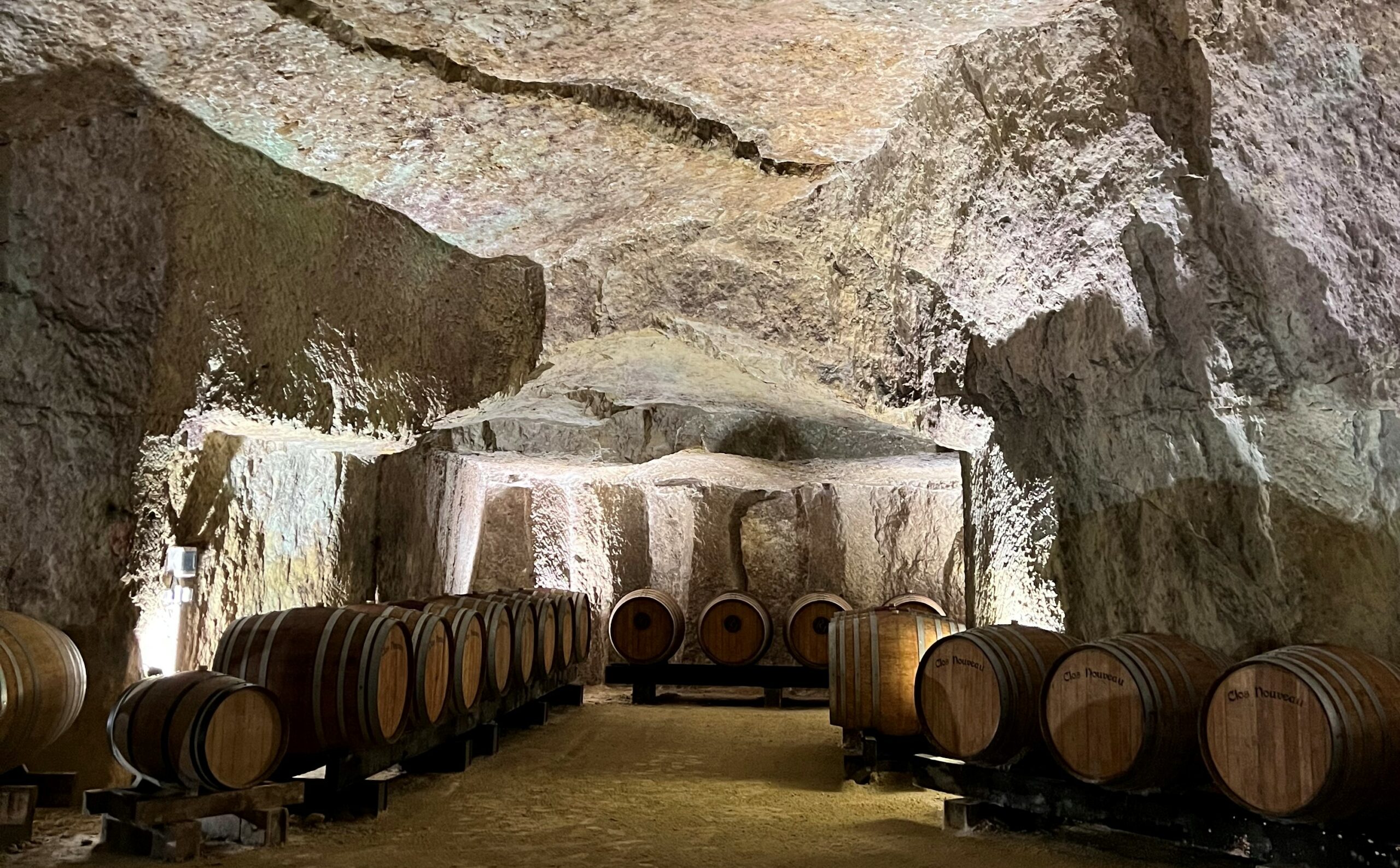
The domaine produces deep, age-worthy Cabernet Francs grown in the iconic clay-limestone terroirs known as "tuffeaux". In this area, many impressive caves were carved into the tufa, created by the French as they extracted this porous rock over the centuries. This tuffeaux help create France's imposing fortresses against the barbarians (then the English), and were later transformed into breathtaking châteaux during the Renaissance. Though rock excavation had significantly decreased after the Revolution – during which some chateaux were used as barracks, others for prisons - the practice continued in some areas as late as 1950.
Today, these caves are used for aging wines, a role at which these dark chambers excel, providing naturally steady, low temperatures in a quiet, humid and light-free environment. The Gauthier family wine cellars can be found in one of these such caves, but theirs is a unique example because the "ceilings" of the cave are 20-25 feet high. It's the cathedral of caves and makes maneuvering their work much easier and more enjoyable than a true cavern with very little head clearance.
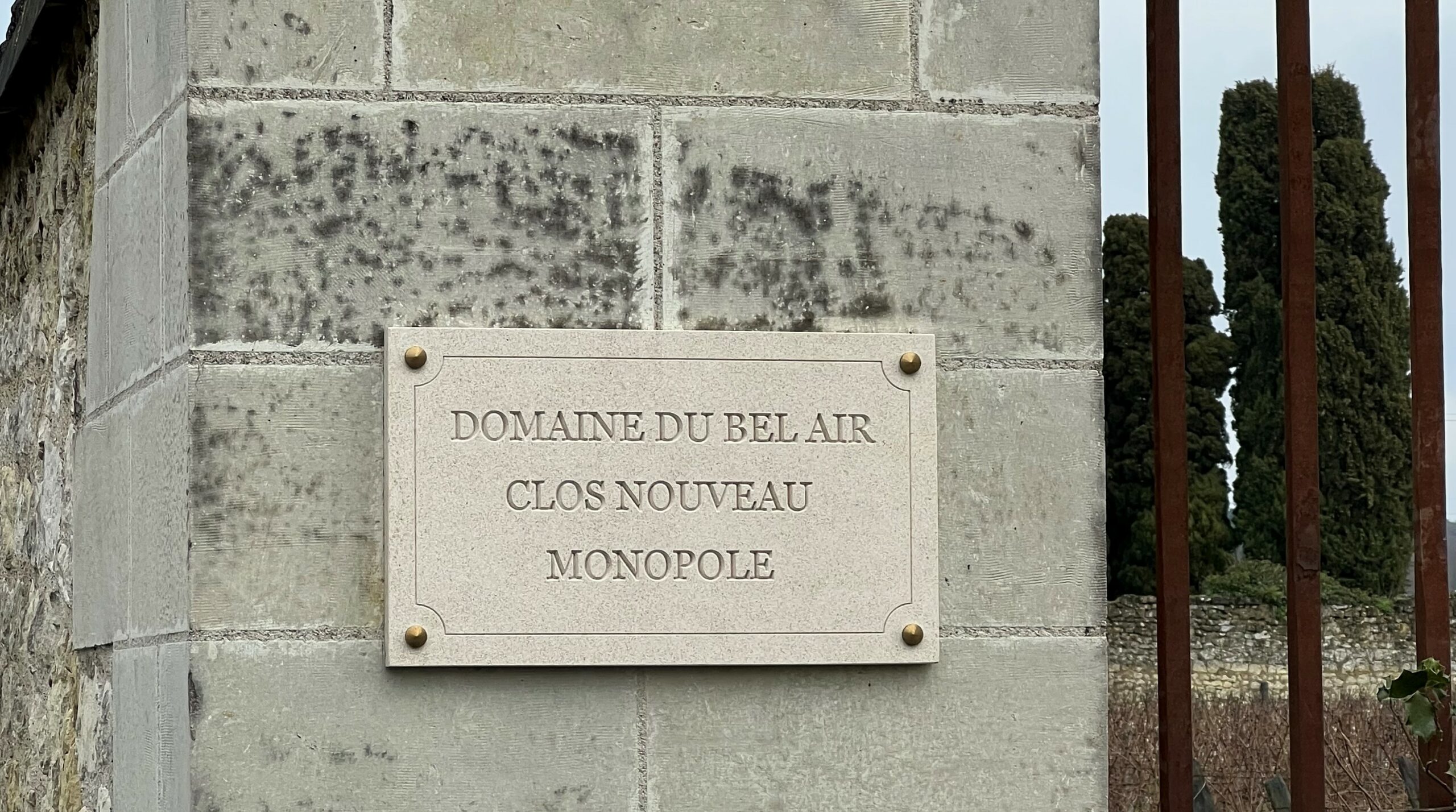
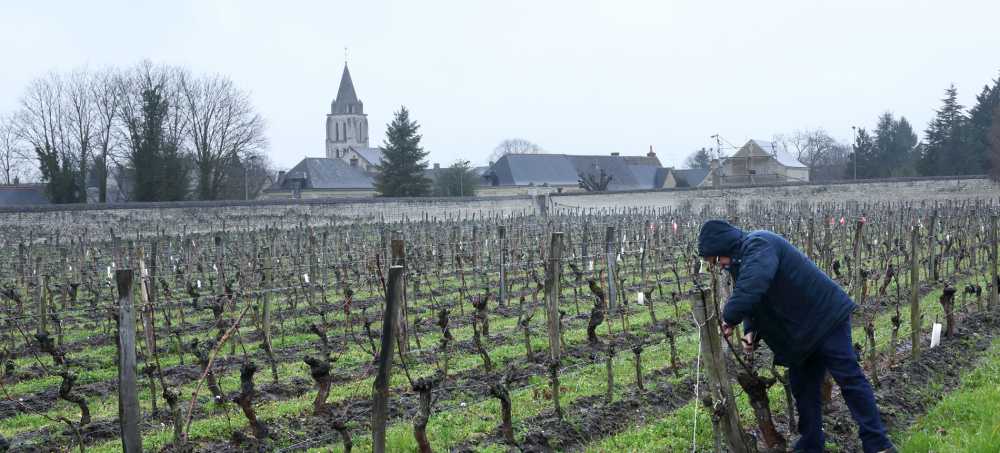
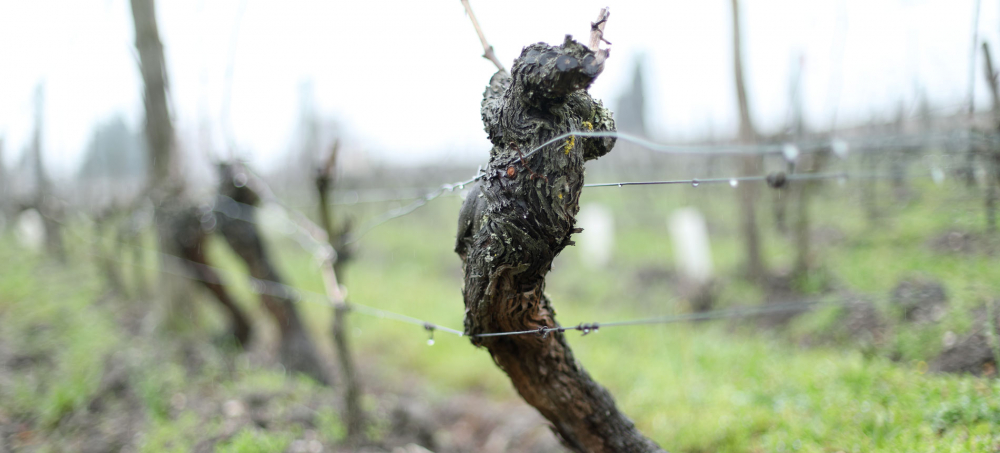
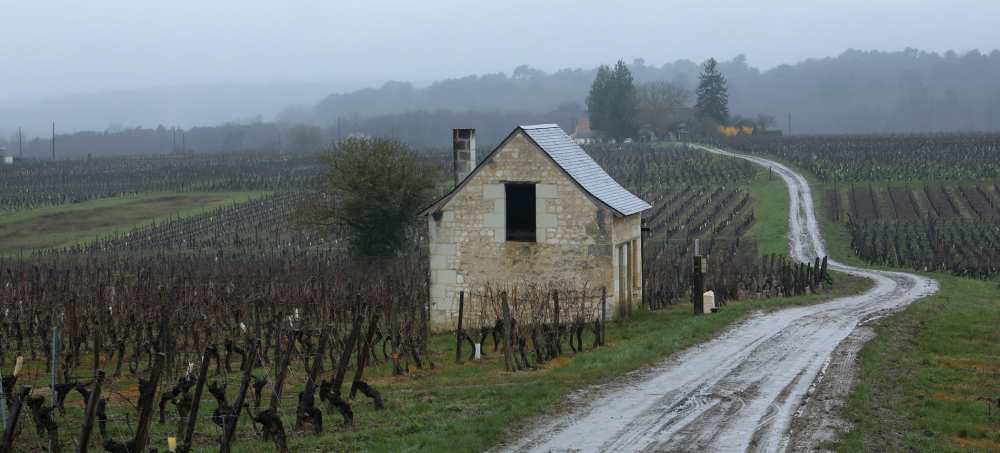
The Gauthiers have long practiced methods that respect the land. They earned official organic certification in 2000 after farming organically since 1989. They are gifted in old vines with an average of 30 year-old vines, and some are as old as 90 years. They till the soils with two gorgeous and powerful draft horses, preferring less soil compaction as well as the physical and emotional benefits of working in partnership with the horses. They prune by hand, practicing green harvesting to keep the crop low - under 40 hectoliters per hectare. Thick rows of grass grows in between the guyot-trained vines, which the Gauthiers harvest by hand. In the past decade, much attention has been paid to rehabilitating the historic "Clos Nouveau" in the center of the village. They repaired the walls – stone by stone – planted fruit trees whose trellising up and along the stone walls gives the feeling of a large garden, and the vines within the Clos are now thriving.
Pierre and Rodolphe produce a juicy and joyful entry-level cuvée called “Jour de Soif”, which comes from younger vines and is aged in stainless steel tanks. Next in the range is "Les Vingt Lieux-Dits", a blend of twenty distinct parcels aged in 600-liter demi-muids for a full year. The top three cuvées are made from old vine single parcels and all see long macerations followed by a lengthy period of ageing in demi-muids. The "Marsaules" ages for 18 months while the complex and age-worthy "Grand Mont" and Monopole "Clos Nouveau" spend up to 36 months in older demi-muids. To some, especially to a growing number of insiders, they are quietly called "The Clos Rougeard of Bourgeuil". But don't tell too many people! We know how that story went...